
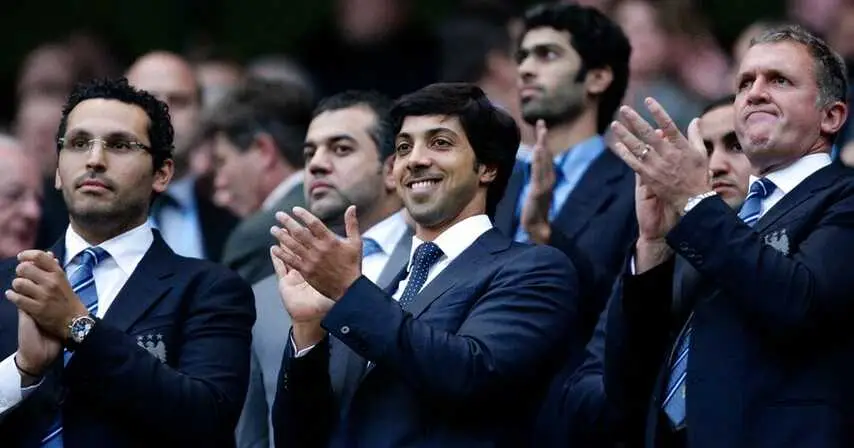
Manchester City are no strangers to controversy when it comes to financial regulations, but the 115 charges levied against them by the Premier League represent the biggest threat to their dominance yet. These charges, spanning over a decade and dating back to 2009, could potentially shake the foundation of modern football’s financial landscape.
To understand why this case is so significant, we have to rewind to 2018 when German outlet Der Spiegel released a series of bombshell leaks based on internal documents obtained from Football Leaks. These documents suggested that Manchester City had been inflating sponsorship deals to circumvent Financial Fair Play (FFP) rules. The leaks alleged that City’s owners, the Abu Dhabi United Group, had funneled money into the club disguised as legitimate sponsorship revenue, effectively allowing them to spend beyond what regulations permitted.
These revelations prompted UEFA to investigate, and in 2020, City were handed a two-year Champions League ban for "serious breaches" of FFP regulations. However, the club took the case to the Court of Arbitration for Sport (CAS), which overturned the ban on a technicality – citing that some allegations were time-barred and that there wasn’t enough conclusive evidence. Though City paid a €20 million fine for non-cooperation, they successfully avoided the more severe punishment, reinforcing the idea that top clubs with enough legal firepower can fight their way out of trouble.
Unlike UEFA’s case, the Premier League’s charges cover an even broader period – spanning from 2009 to 2018. The allegations include failing to provide accurate financial information, breaching profit and sustainability rules, failing to disclose full player and manager salaries, and obstructing the investigation. Essentially, City are accused of engaging in financial misrepresentation on a scale never seen before in English football.
What makes this case different from the UEFA investigation is that the Premier League does not have a statute of limitations on financial breaches. This means City cannot argue that the charges are "too old" to be considered, which was a key reason why CAS dismissed parts of UEFA’s case. Additionally, the Premier League is operating within its own legal framework, meaning City cannot simply appeal to CAS again if they are found guilty.
If Manchester City are found guilty, the consequences could be severe. The Premier League has a range of punishments at its disposal, including:
If any of these punishments were to be applied, it would send shockwaves through football. City’s dominance over the past decade would be scrutinized in an entirely new light, and it would force a conversation around how elite clubs operate financially.
Despite the serious nature of the charges, there’s a growing sense that Manchester City may once again slip through the cracks. The club has already assembled an elite team of lawyers, including top barristers who specialize in sports law, and their legal defense is expected to be as aggressive as it was against UEFA.
More importantly, City’s actions in the transfer market suggest that they aren’t the slightest bit worried about the potential consequences. In the winter transfer window alone, the club spent €210 million. If City were genuinely concerned about financial punishments or potential restrictions, such lavish spending would be unimaginable.
The reality is, football has long favored those with power and money. The sport’s governing bodies have repeatedly shown that they struggle to enforce regulations on clubs backed by state-level wealth. Whether it’s PSG’s continued FFP battles or Chelsea’s creative accounting under Roman Abramovich and Todd Boehly, elite clubs often find ways to maneuver around financial rules.
While the Premier League has taken a bold step in charging City, actually enforcing meaningful consequences is a different story. The financial and political influence of City’s ownership cannot be underestimated, and history has shown that such power often triumphs over regulation.
The decision on Manchester City’s 115 charges will be one of the most significant rulings in football history. The hearing of Premier League’s 115 charges against Manchester City took place in October, and a verdict will most likely be publicly released in spring of 2025. So, if City are found guilty and severely punished, it could set a precedent that finally holds wealthy clubs accountable. However, if they once again emerge unscathed – or given a slap on the wrist – it will reinforce the belief that football’s financial rules are toothless against the elite.
As things stand, the latter outcome seems more likely. With a legal team as formidable as their squad and a bottomless pit of resources, City are well-equipped to fight these allegations every step of the way. If the past is anything to go by, they will do just that – and they will probably win.


Share this post


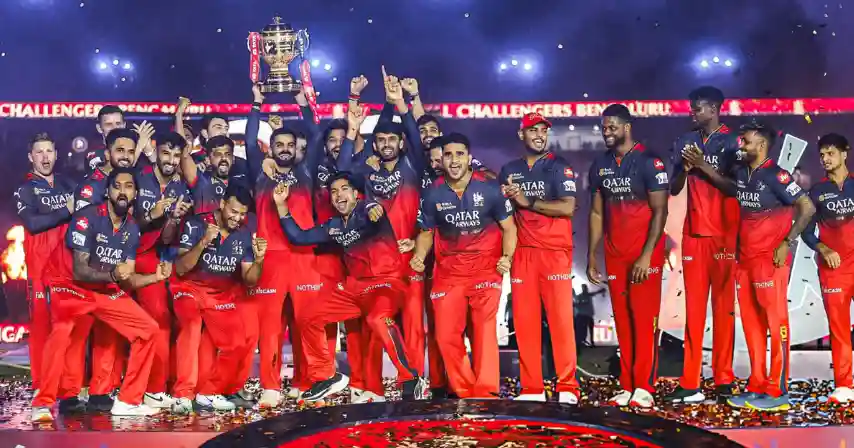
The Karnataka State Cricket Association has received official approval from the Government of Karnataka to host Indian Premier League matches at the iconic M. Chinnaswamy Stadium in Bengaluru. The venue will host the season opener on March 28 between Royal Challengers Bengaluru and Sunrisers Hyderabad, setting the stage for an electrifying start to the IPL with passionate fans and thrilling cricket action.
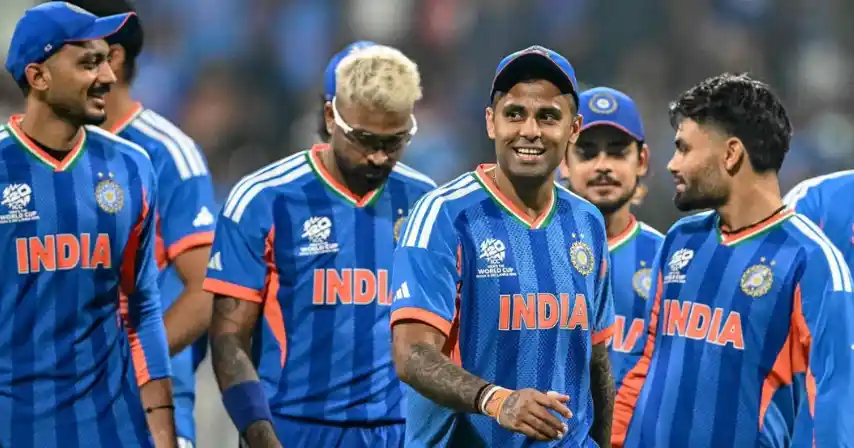
Following India’s historic T20 World Cup 2026 title defense, the BCCI has announced a record-breaking ₹131 crore reward for the Men in Blue! This massive bounty honors the squad’s dominant victory over New Zealand. Each of the 15 players will receive ₹6 crore, with the remaining ₹41 crore distributed among Gautam Gambhir’s coaching staff and support personnel, celebrating India’s unprecedented third T20 world title.
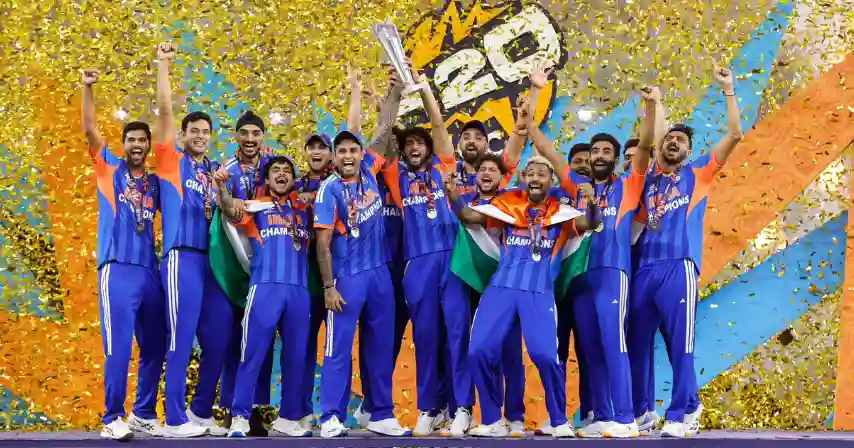
History was created as the India national cricket team lifted the ICC Men's T20 World Cup trophy again, becoming the first team to win back-to-back titles and the first to win three T20 World Cups. Sanju Samson led the charge with a brilliant 89 in the final and a stunning tournament comeback to win Player of the Tournament, while Jasprit Bumrah’s 4-wicket spell sealed India’s historic triumph.
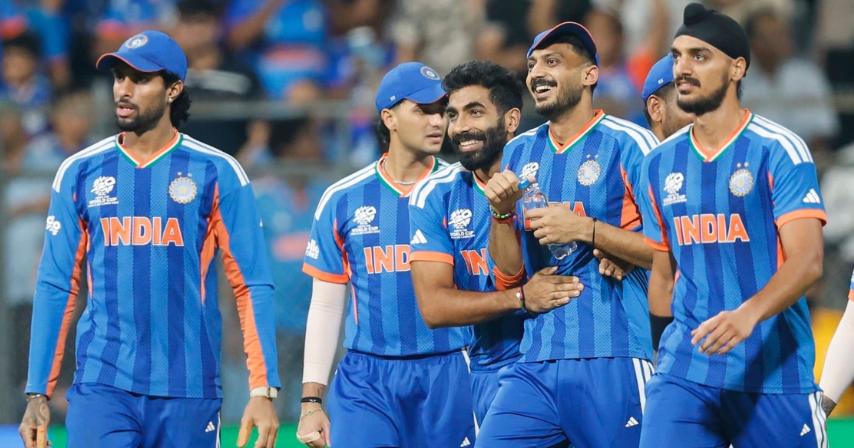
Wankhede witnessed history. India stormed into their first-ever back-to-back T20 World Cup Final, surviving Jacob Bethell’s record-breaking ton in a 499-run thriller. Sanju Samson’s 89 equaled Virat Kohli’s knockout legacy as India posted a record 253/7. Now, the Men in Blue stand on the precipice of immortality: one win against New Zealand to become the first team to win consecutive World Cup titles.
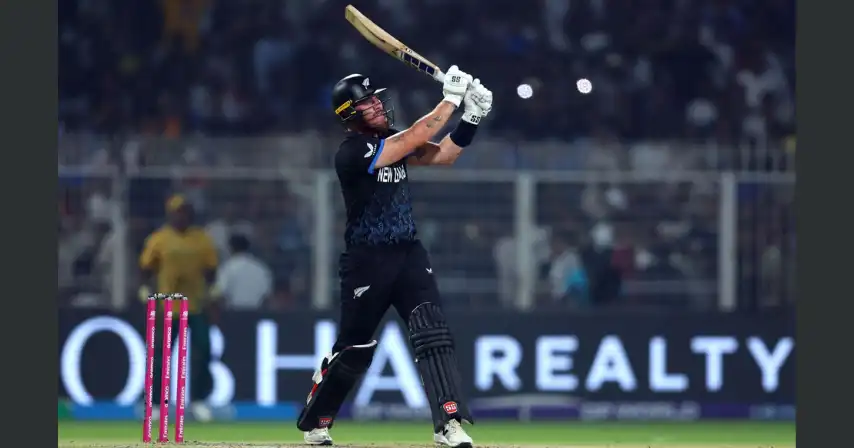
History was rewritten at Eden Gardens! New Zealand’s Finn Allen shattered the record books, smashing the fastest hundred in T20 World Cup history in just 33 balls. Obliterating Chris Gayle’s long-standing 47-ball record, Allen’s explosive 2026 semi-final masterclass against South Africa has propelled the Kiwis into the Grand Final. Is this the greatest T20 innings ever? Explore the new top 5 fastest centurions now.
ScoreWaves © 2025 Copyright. All Rights Reserved.
 Views:
 Download Our App
 IOS
IOS Google Play Store