

The 2024/25 season has been a welcome bonus for Premier League fans. After years of the same clubs finishing in the European spots, this season’s table looks refreshingly different. Bournemouth, Nottingham Forest, Newcastle, Fulham, and Brighton are all challenging for Champions League and Europa League spots. However, one thing that hasn’t changed is the relegation battle.
Ipswich Town, Leicester City, and Southampton – the three promoted clubs – find themselves in the drop zone. Last season, a similar story unfolded as all three promoted clubs – Luton Town, Burnley, and Sheffield United – were sent straight back down. It raises an important question: Is surviving in the Premier League becoming an impossible task for newly promoted teams? More importantly, has the gulf between the Premier League and the Championship become too wide to bridge?
For years, reaching the Premier League was the ultimate dream for clubs in the English football pyramid. Promotion meant a financial windfall, global exposure, and a chance to compete at the highest level. The Championship itself is one of the most competitive leagues in world football, making promotion a grueling challenge. But in recent years, it seems that getting promoted isn’t the hardest part anymore – staying in the Premier League is.
Typically, newly promoted sides struggle in the top-flight – nothing new there. However, last season marked only the second time in history, and the first since 1998, that all three promoted clubs were immediately relegated. Worse still, they were statistically the worst bottom three in Premier League history. Burnley, Luton Town, and Sheffield United picked up a combined total of just 66 points – 10 fewer than the next worst tally on record.
This season, Ipswich, Leicester, and Southampton are projected to finish with an even lower combined total of 63 points. That would make them the worst-performing group of promoted clubs in history. So why are newly promoted sides struggling so much despite seemingly strong financial backing?
At first glance, one might assume that promoted teams struggle due to a lack of financial resources. But the reality is different. Ipswich spent £106 million ($134m) in the summer – the 13th-highest transfer expenditure in world football, according to Transfermarkt. To put that into perspective, Bayern Munich spent just slightly more, and Saudi club Al Ittihad slightly less. Southampton splashed £99m, while Leicester spent £73m—still a considerable sum, even if it was the sixth-lowest in the Premier League.
Despite these investments, the gap between the Championship and the Premier League is widening. A single summer transfer window is not enough to make up for years of disparity in quality, squad depth, and – crucially – wages. The Premier League’s mid-table clubs, let alone the top six, have spent years building financial muscle. The result? Promoted teams are essentially playing a game of catch-up that they have no realistic chance of winning.
The struggles of promoted clubs are just one part of the problem. The other part? Relegated clubs continue to dominate the Championship, creating a vicious cycle that prevents fresh teams from breaking into the Premier League. Currently, Sheffield United and Burnley – both relegated last season – sit second and third in the Championship table. Leeds United, West Brom, Norwich, and Watford – clubs that have been recently relegated – are all competing for promotion. It’s a common trend: clubs relegated from the Premier League often have the strongest squads in the Championship, giving them a massive advantage over other second-division sides. So, why does this happen? The answer lies in parachute payments.
Parachute payments were introduced to soften the financial blow of relegation. Premier League clubs operate with significantly higher wage bills and transfer expenditures. Without financial assistance, dropping down to the Championship would be financially devastating. To ease the transition, the Premier League provides relegated teams with parachute payments over three years:
For clubs that manage their finances well, these payments allow them to retain key players and remain competitive in the Championship. However, the unintended consequence is that it creates a massive imbalance.
Championship clubs that haven't been in the Premier League recently operate on significantly smaller budgets. They struggle to match the spending power of relegated teams, who use their parachute payments to maintain superior squads. As a result, the same teams bounce between the two divisions, making it increasingly difficult for new clubs to break in.
The current system leads to two major problems:
The dream of Premier League promotion is becoming harder to sustain. The widening gap between the top two divisions is making it almost impossible for promoted teams to survive, and the cycle of relegated clubs dominating the Championship only exacerbates the issue.
If nothing changes, the Premier League will continue to see newly promoted clubs struggle, while the same relegated teams bounce straight back up. Reforming parachute payments and redistributing financial resources could go a long way in addressing these issues. Until then, the Premier League will remain a promised land that feels increasingly out of reach for many clubs.


Share this post



The Karnataka State Cricket Association has received official approval from the Government of Karnataka to host Indian Premier League matches at the iconic M. Chinnaswamy Stadium in Bengaluru. The venue will host the season opener on March 28 between Royal Challengers Bengaluru and Sunrisers Hyderabad, setting the stage for an electrifying start to the IPL with passionate fans and thrilling cricket action.
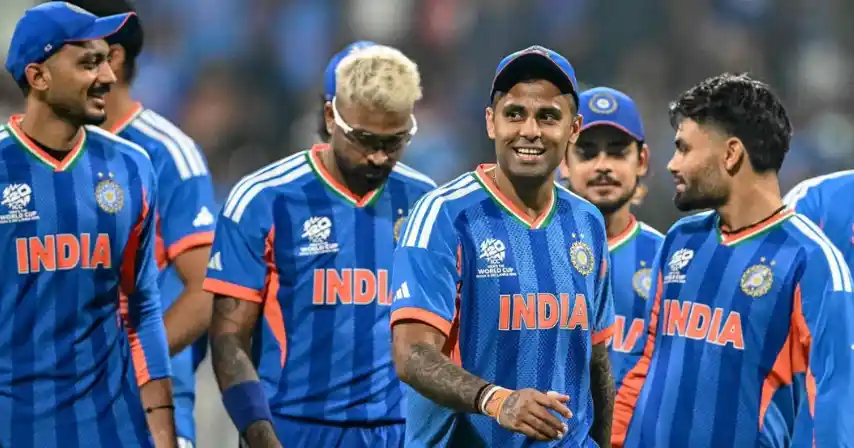
Following India’s historic T20 World Cup 2026 title defense, the BCCI has announced a record-breaking ₹131 crore reward for the Men in Blue! This massive bounty honors the squad’s dominant victory over New Zealand. Each of the 15 players will receive ₹6 crore, with the remaining ₹41 crore distributed among Gautam Gambhir’s coaching staff and support personnel, celebrating India’s unprecedented third T20 world title.
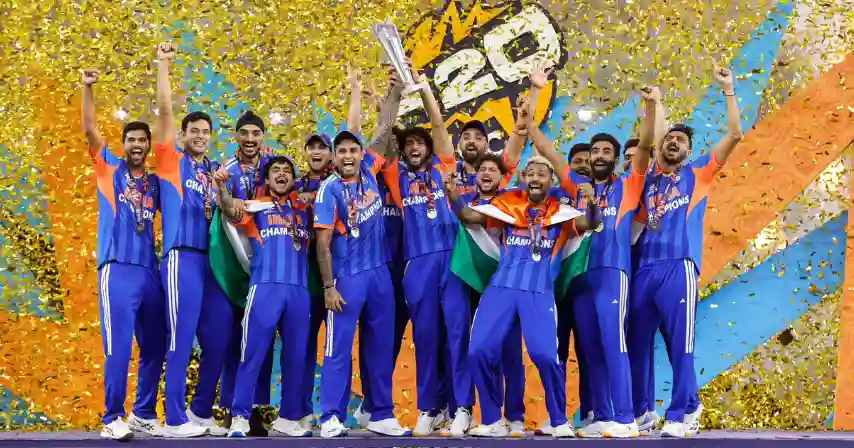
History was created as the India national cricket team lifted the ICC Men's T20 World Cup trophy again, becoming the first team to win back-to-back titles and the first to win three T20 World Cups. Sanju Samson led the charge with a brilliant 89 in the final and a stunning tournament comeback to win Player of the Tournament, while Jasprit Bumrah’s 4-wicket spell sealed India’s historic triumph.
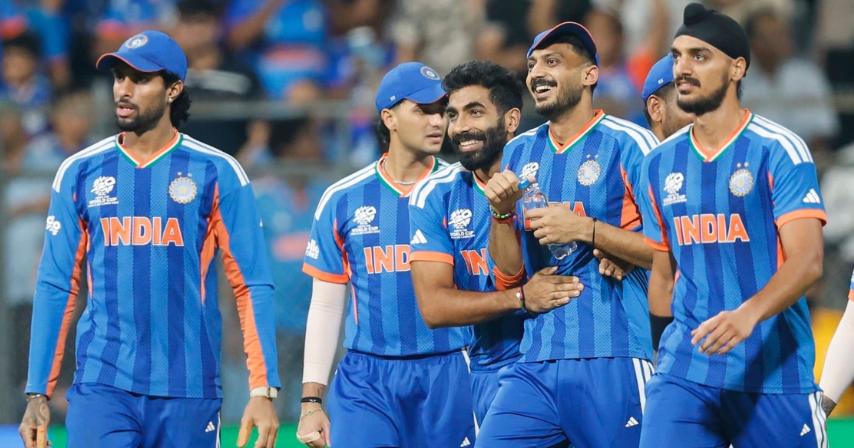
Wankhede witnessed history. India stormed into their first-ever back-to-back T20 World Cup Final, surviving Jacob Bethell’s record-breaking ton in a 499-run thriller. Sanju Samson’s 89 equaled Virat Kohli’s knockout legacy as India posted a record 253/7. Now, the Men in Blue stand on the precipice of immortality: one win against New Zealand to become the first team to win consecutive World Cup titles.
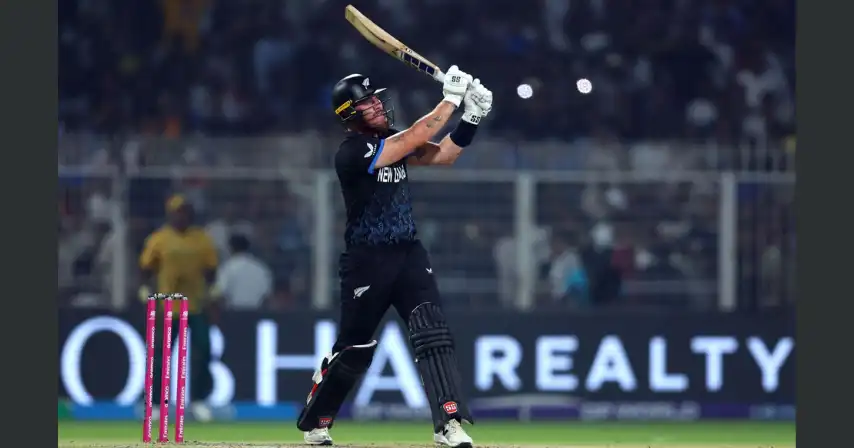
History was rewritten at Eden Gardens! New Zealand’s Finn Allen shattered the record books, smashing the fastest hundred in T20 World Cup history in just 33 balls. Obliterating Chris Gayle’s long-standing 47-ball record, Allen’s explosive 2026 semi-final masterclass against South Africa has propelled the Kiwis into the Grand Final. Is this the greatest T20 innings ever? Explore the new top 5 fastest centurions now.
ScoreWaves © 2025 Copyright. All Rights Reserved.
 Views:
 Download Our App
 IOS
IOS Google Play Store